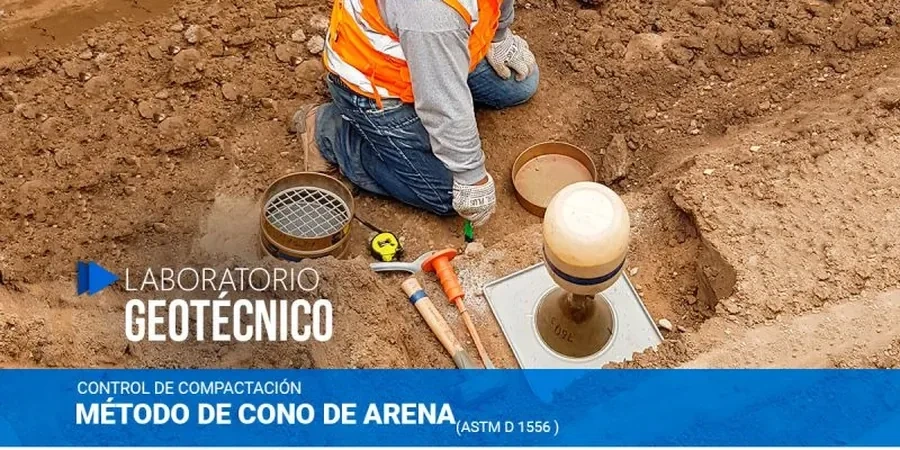
Florida’s building code (7th Edition 2020) ties directly into ASTM D1556 for field density verification, and here in Orlando the combination of sandy surficial soils and seasonal high water tables makes in-place density data indispensable. Whether you are compacting structural fill east of the Econlockhatchee River or placing base course under a new warehouse near the 528 Beachline, the sand cone test remains the reference method when nuclear gauge readings need independent backup. In our experience, Orlando contractors who run parallel sand cone tests during the first lifts avoid costly rework later — the difference between a passing proof roll and a soft spot often traces back to density assumptions that never matched reality. We also see projects where early Proctor tests define the target curve and subsequent SPT drilling confirms bearing capacity at depth, creating a complete picture from fill to bearing stratum.
Orlando’s sandy soils can pass a visual inspection and still fail a density test — the sand cone catches what the eye misses.
Top questions
How much does a sand cone density test cost in Orlando?
For most sites within the Orlando metro area, a single sand cone test typically runs between US$110 and US$150, which includes the technician’s time, calibration sand, moisture determination, and the signed report. The exact cost depends on the number of tests per mobilization and travel distance to locations like Apopka, Ocoee, or St. Cloud. We always confirm pricing during the proposal stage so there are no surprises.
When does FDOT require a sand cone test instead of a nuclear gauge?
FDOT spec 120 designates the sand cone (ASTM D1556) as the referee method whenever nuclear gauge readings are in dispute, when the gauge cannot be correlated to the specific soil type, or when organic content in the fill affects the gauge’s hydrogen-based moisture measurement. Inspectors also request sand cone tests for acceptance of the first lift on critical structures such as bridge approach embankments.
How many density tests do I need for a typical building pad in Orange County?
Standard practice follows a minimum of one test per 2,500 square feet per lift, or a 50-foot grid pattern, whichever is tighter. The geotechnical report may specify a denser pattern if the fill material shows variable compaction characteristics — common in Orlando where A-3 sands transition to A-2-4 silty sands within the same borrow source.
Can the sand cone method be used in rainy conditions?
The test itself cannot be performed during active rainfall because water entering the excavated hole distorts the volume measurement and the moisture sample becomes unrepresentative. Orlando’s afternoon thunderstorms during summer months require scheduling tests in the morning window. If a lift gets rained on, we wait until the surface drains and take a moisture sample from the upper inch to verify that the compaction moisture is still within the specified range before proceeding.