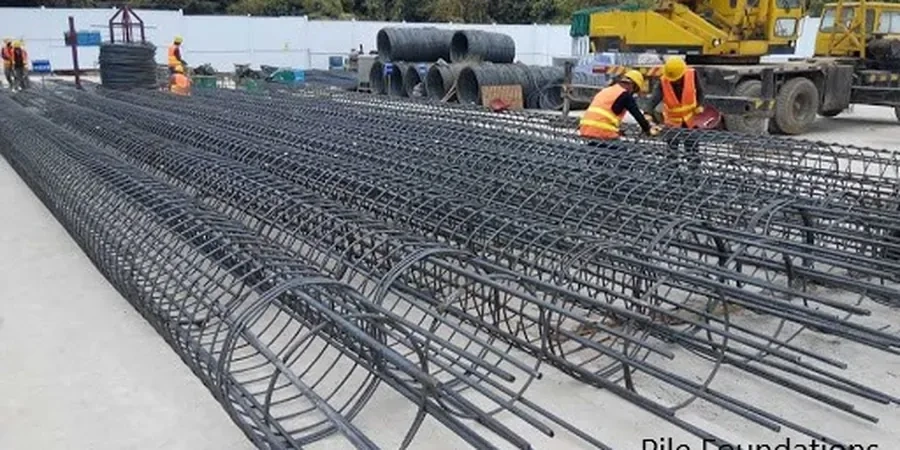
In Orlando, the ground beneath your feet is rarely as solid as it looks. We have seen too many projects stall because the initial site investigation missed a buried karst feature or a loose sand lens at depth. The problem is not the limestone itself. The problem is the unpredictability of its surface. Designing a pile foundation here means choosing a deep foundation system that can bridge those voids and transfer load to competent rock, often 60 to 90 feet down. A standard boring log is not enough. You need a targeted geotechnical campaign that combines CPT testing to map the soft zones continuously and laboratory strength data from recovered rock cores. This is how we help structural engineers sleep at night, knowing the piles will find solid bearing even if the overburden tells a different story.
In Orlando karst, the pile tip does not just need bearing capacity. It needs a competent rock socket long enough to bypass the next dissolution void.
Regional considerations
Orlando grew fast across a landscape that was never going to make foundation engineering easy. The Winter Park sinkhole of 1981 swallowed a house, a Porsche dealership, and an Olympic-size swimming pool in a single afternoon. That event reshaped how Orange County regulates deep foundations. Any pile foundation design today must address the risk of raveling: the slow internal erosion of sand into limestone cavities that can create a sudden collapse with zero warning at the surface. For our engineering team, a standard bearing capacity check is not enough. We specify minimum rock socket lengths, often 10 to 15 feet into competent limestone with RQD above 50%, and require cross-hole sonic logging on every production pile in high-risk zones. The cost of a single missed void is not just structural failure. It is a six-figure repair and a public record that follows the property forever.
Top questions
How deep do piles typically need to go in Orlando to reach competent rock?
In most of the Orlando metropolitan area, competent limestone of the Ocala formation is encountered between 60 and 90 feet below grade. However, the depth to solid rock can vary significantly due to the irregular karst surface. We never rely on a single boring and always perform continuous rock coring to confirm the top of competent rock and measure RQD before finalizing pile tip elevations.
What type of pile is most suitable for Orlando's karst geology?
Augered cast-in-place piles and driven H-piles are both common, but the choice depends on access, vibration sensitivity, and the specific karst profile. In high-sinkhole-risk zones, we often recommend drilled shafts with permanent casing through the overburden and a rock socket into competent limestone. The key is verifying the socket length is sufficient to bypass any underlying dissolution voids.
Does a standard soil boring provide enough information for pile design in Orlando?
No. A standard SPT boring stops at refusal and provides little information about the limestone quality below. For pile foundation design in karst, we require rock coring with recovery and RQD measurement, plus geophysical methods such as cross-hole seismic or electrical resistivity tomography to detect hidden cavities that a boring might miss between exploration points.
What is the typical cost range for a pile foundation design package in Orlando?
A complete pile foundation design package for a typical commercial building in Orlando, including targeted karst exploration, axial capacity analysis, rock socket design, and construction specifications, generally ranges from US$1,640 to US$6,010 depending on project size, number of borings, and the required load testing program.