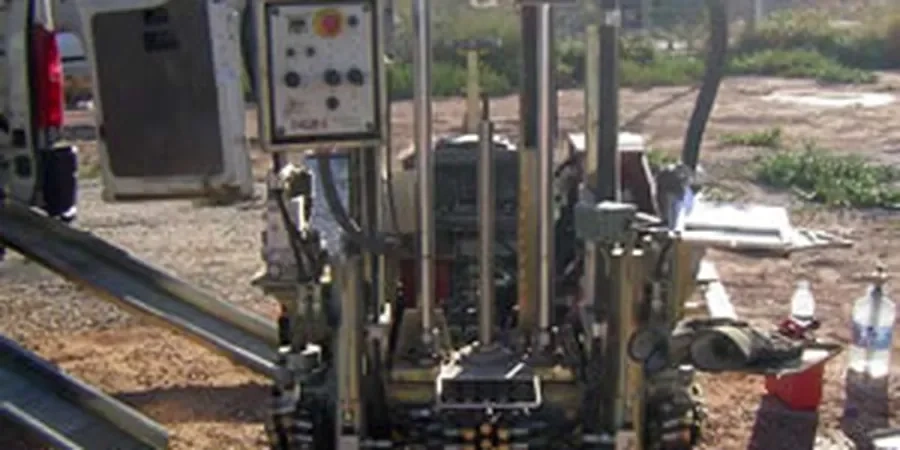
Central Florida's geology demands a subsurface investigation method that can handle the dramatic transitions between loose surface sands, stiff clay lenses, and weathered limestone pinnacles that define Orlando's terrain. With a subtropical climate producing intense seasonal rainfall and a near-surface aquifer that fluctuates rapidly, the city's soil profile is anything but uniform. The cone penetration test (CPT) provides the continuous, high-resolution data that traditional SPT borings simply cannot match in these conditions. Orlando sits at approximately 82 feet above sea level on the limestone-dominated Lake Wales Ridge, surrounded by lower-lying sand hills and former citrus groves that are now dense residential developments. The CPT's ability to record tip resistance, sleeve friction, and pore pressure every two centimeters gives geotechnical engineers the precision needed to spot solution cavities, identify loose zones prone to raveling, and design foundations that accommodate the erratic bedrock surface typical of Orange County.
In Orlando's karst landscape, CPT cone refusal on pinnacled limestone is just as informative as a 60-foot push through sand: both define the foundation risk profile.
Regional considerations
Chapter 18 of the IBC and Florida Building Code Section 1803 mandate subsurface investigation for all structures, but the specific risk in Orlando is undetected karst features. A standard SPT boring spaced at 50-foot intervals can easily straddle a narrow solution pipe or a buried ravine filled with loose debris, giving a false sense of uniform bearing. The CPT's continuous profile eliminates this blind spot. The test is also central to liquefaction screening in sandy soils with high groundwater: the cone resistance is correlated directly to cyclic resistance ratio through the Robertson and Wride (1998) method, which is the foundation of modern liquefaction trigger analysis. For sites near Orlando's many lakes and retention ponds, the CPT identifies soft, compressible clays that will settle under embankment loads long after construction is complete. Missing these layers leads to differential settlement, cracked slabs, and litigation that costs far more than the investigation itself.
Standards that apply
ASTM D5778-20: Standard Test Method for Electronic Friction Cone and Piezocone Penetration Testing of Soils, Florida Building Code 2023, Chapter 18 (Soils and Foundations), IBC 2021, Section 1803.2: Foundation Soils Investigation, Robertson & Wride (1998) CPT-Based Liquefaction Evaluation Method (NCEER Workshop)
Top questions
How much does a CPT test cost in Orlando?
Most CPT soundings in the Orlando area range from US$190 to US$260 per test location for standard depths up to 60 feet, depending on push resistance and mobilization requirements. Seismic CPT modules and deep pushes beyond 80 feet add to the unit rate. A site with three to five soundings and a brief factual report typically falls between US$1,800 and US$3,500 total.
Can CPT testing detect sinkholes in Florida?
The CPT is one of the most effective tools for sinkhole assessment. The continuous record of tip resistance and sleeve friction reveals abrupt drops in strength that indicate voids, raveled zones, or soft infill within the limestone. When the cone encounters a cavity, it registers zero tip resistance followed by a sudden spike at the cavity floor, a signature that is unmistakable in the data log.
What depth can a CPT rig reach in Orlando soils?
Penetration depth depends on the subsurface resistance. In loose to medium-dense sands east of Orlando, standard 20-ton equipment routinely reaches 80 to 100 feet. In areas with shallow limestone, such as Winter Park or near Wekiwa Springs, refusal on competent rock may occur at 15 to 30 feet, which is itself a valuable data point for foundation design.
Do you need a separate boring for soil classification with CPT?
Not necessarily. The Soil Behavior Type (SBT) chart developed by Robertson (1990, updated 2016) classifies soil directly from normalized cone resistance and friction ratio. While occasional sampling via test pits or SPT borings provides physical verification, the CPT alone gives a reliable continuous classification that is accepted by most Orlando-area geotechnical reviewers.