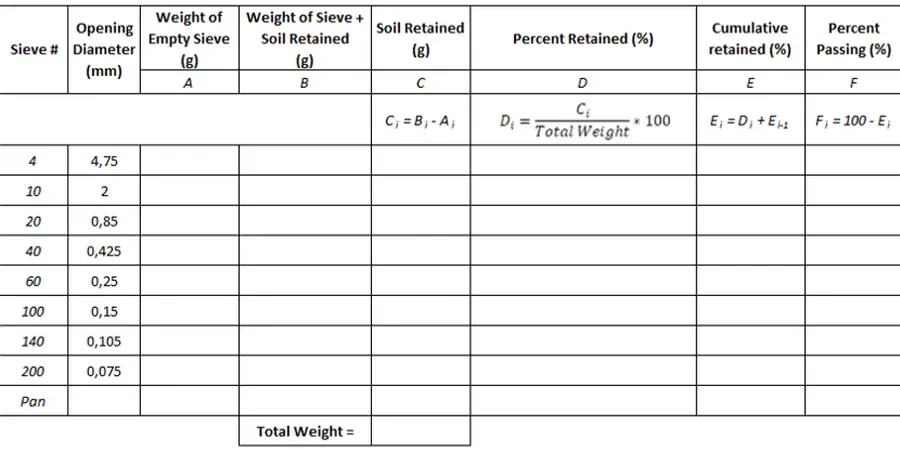
Orlando's subtropical rainfall patterns mean water moves through the soil profile fast—or not at all, depending on the gradation. A proper grain size analysis using both sieve and hydrometer methods tells you exactly how fine-grained material will behave under seasonal saturation. We run these tests because the difference between a well-draining sandy layer and a silt pocket that holds water for weeks can determine whether a retention pond works or a slab heaves. The Atterberg limits test often pairs with the hydrometer curve to confirm plasticity characteristics of the minus No. 200 fraction, especially in the clayey residuals common around the Wekiva basin. For deeper characterization, CPT soundings provide a continuous strength profile that correlates directly with grain size trends in the upper 30 meters.
In Orlando's karst terrain, grain size distribution dictates whether a soil will pipe into solution cavities or bridge across them—this is not a textbook exercise, it's risk management.
Regional considerations
Orlando sits at roughly 82 feet above mean sea level, but the real risk lies underground—the Floridan aquifer is shallow, and the limestone beneath is riddled with dissolution features. A poorly graded sand with less than 5% fines will pipe water straight down into the aquifer, carrying contaminants from stormwater basins or construction runoff. Conversely, a soil with 40% passing the No. 200 sieve can trap water above a low-permeability layer, triggering differential settlement under building pads near the Conway chain of lakes. We've seen projects where skipping the hydrometer portion of the grain size analysis led to underestimated consolidation settlement in silty lenses that the sieve curve alone missed entirely. In Orange County's karst environment, the fines content is often the single most important number on the geotechnical report for foundation drain design.
Top questions
How much does a grain size analysis with hydrometer cost in Orlando?
A complete sieve plus hydrometer test typically runs between US$90 and US$180 per sample, depending on whether you need the full combined package or just the fine-fraction hydrometer curve. Turnaround is usually 3 to 5 business days.
What Orlando soil types require the hydrometer method?
Any soil where more than 12% passes the No. 200 sieve should include a hydrometer analysis. In the Orlando area, that covers the silty fine sands near Lake Apopka, the clayey residuals over the Ocala Limestone, and the organic muck layers common in drained marshland subdivisions.
Can grain size testing help with retention pond design in Orange County?
Absolutely. The county's stormwater management rules require infiltration rates that tie directly to grain size distribution. A well-graded sand with a D10 around 0.15 mm will drain differently than a uniform fine sand with the same D50—the sieve curve tells that story, and the hydrometer confirms whether fines will migrate and clog the system over time.
How do you sample soils for grain size analysis on an Orlando construction site?
We typically grab disturbed samples from test pits, SPT split spoons, or auger borings. For the hydrometer, we need about 500 grams of material passing the No. 10 sieve. The sample should be sealed in a plastic bag immediately to preserve natural moisture content—Orlando's humidity can skew readings if the sample dries out before reaching the lab.