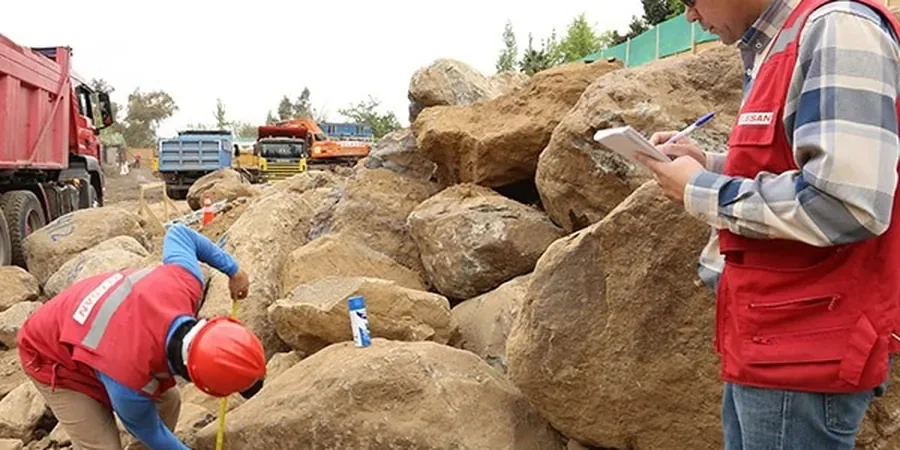
We worked on a tilt-wall warehouse project off Narcoossee Road last summer where the owner almost skipped the full soil mechanics study because the site 'looked fine' from the surface. First few Shelby tube samples told a different story — loose fine sand with silt lenses down to 18 feet, sitting right above a weathered limestone layer that showed cavities on the seismic refraction profile. Orlando's geology fools a lot of people. You see flat land with palmettos and think it's uniform, but the truth is this area sits on a mix of ancient marine terraces, karst limestone, and sandy ridges that shift every few hundred feet. A proper soil mechanics study in Orlando isn't just a box to check for the permit office — it's what tells you whether your slab-on-grade needs post-tensioning, if your stormwater pond will hold water, or why the neighbor's parking lot cracked six months after opening. Our lab on the east side runs Atterberg limits, triaxial shear, one-dimensional consolidation, and grain-size distributions under ASTM D2487, and we correlate everything with field data from SPT borings and CPT soundings so the geotechnical report actually matches what the excavator finds in the ground.
Orlando's karst geology means two adjacent lots can have completely different bearing conditions — you don't know until you drill.
Regional considerations
A pattern we see repeatedly in Orlando is builders treating the upper 5 to 8 feet of medium-dense sand as a bearing layer without checking what sits underneath. The Hawthorn Group sediments — lean clays, clayey sands, and sometimes phosphatic gravel — can be normally consolidated or slightly overconsolidated, and when you load them with a three-story apartment building plus fill, the settlement differential between column lines can exceed half an inch. That's enough to rack door frames and crack CMU partition walls. Sinkhole activity adds another layer of uncertainty: dissolution of the underlying limestone creates raveling zones where the soil arch collapses progressively. A soil mechanics study that includes cone penetration data or resistivity profiles gives you a heads-up before the excavator finds a soft spot the size of a Volkswagen. The other risk we flag in our reports is seasonal groundwater — Orlando's water table swings from near-surface in September to 8 feet down in May, and that fluctuation changes effective stress and bearing capacity calculations if you don't design for the wet-season condition.
Standards that apply
ASTM D1586-18 — Standard Test Method for SPT and Split-Barrel Sampling, ASTM D4767 — Consolidated-Undrained Triaxial Compression on Cohesive Soils, ASCE 7-22 — Minimum Design Loads for Buildings Chapter 20 (Site Classification), IBC 2021 Chapter 18 — Soils and Foundations, ASTM D2487-17 — Unified Soil Classification System, FDOT Standard Specs Section 125 — Geotechnical Services
Top questions
What does a soil mechanics study cost for a typical Orlando commercial lot?
For a standard program — say four borings to 30 feet with SPT, Shelby tubes at select depths, lab testing including triaxial, consolidation, Atterberg limits, grain-size, and a signed geotechnical report — you are looking at a range between US$3,150 and US$5,860. The spread depends on access conditions, depth to refusal, whether we add geophysics for karst, and how many Shelby samples go to the lab.
How deep do you usually drill for a soil mechanics study in Orlando?
Most commercial projects in Orange County go to 25 or 30 feet, which gets us through the surficial sand and a few feet into the Hawthorn Group clays. If the structural loads are heavier — say a mid-rise with a mat foundation — we may push to 50 feet or until auger refusal on limestone. The depth is always based on the stress bulb influence zone per the foundation geometry.
Do I really need triaxial testing, or is SPT enough for a warehouse slab?
SPT gives you blow counts and a rough soil profile, but it does not give you drained or undrained shear strength, pore pressure behavior, or consolidation parameters. A tilt-wall warehouse with column loads on isolated footings needs triaxial CU data to calculate bearing capacity and estimate settlement. Skipping the lab means the EOR has to use conservative presumptive values from the code, which often leads to over-excavation and more concrete — costing more than the testing would have.
How long does the full study take from drilling to the final report?
Fieldwork usually takes one to three days depending on the number of borings and access. Lab testing runs about two to three weeks — consolidation and triaxial tests need time because we apply incremental loads and let pore pressures equalize. The signed geotechnical report typically lands in your inbox three to four weeks after mobilization, sooner if the program is simple and the lab isn't backed up.