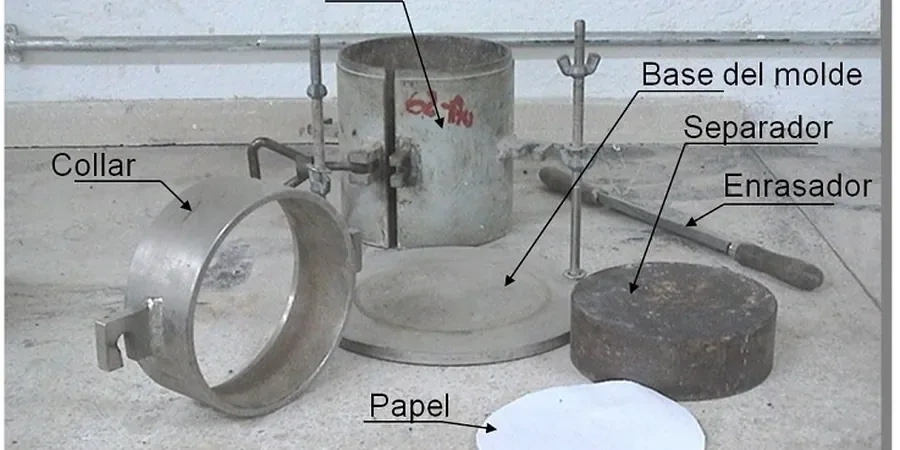
We recently completed compaction testing for a 6-story mixed-use development near Lake Eola where the contractor was struggling to achieve density on a silty sand fill. The material looked fine in the bank, but after placement it kept failing the nuclear gauge readings. We sampled the fill and ran a Standard Proctor to establish a realistic maximum dry density, and it turned out the original spec had been based on a Modified Proctor curve that simply wasn't achievable with the available compaction equipment. That's the kind of on-the-ground reality we handle routinely across Orlando—from Baldwin Park infill lots to distribution centers in the southwest industrial corridor. A proper Proctor curve eliminates the guesswork and gives the QA team a defensible benchmark. In Orange County's subtropical climate, where afternoon thunderstorms can spike moisture content in minutes, having an accurate moisture-density relationship is critical for passing field density tests.
An accurate Proctor curve is the single most important number on a compaction spec—get it wrong and every field density test becomes a dispute.
Regional considerations
Central Florida's subtropical rainfall pattern creates a compaction risk window that out-of-state engineers sometimes underestimate. Between June and September, Orlando receives over 7 inches of rain per month on average, and a fill lift that was at optimum moisture at 10 AM can be 3% over optimum by 2 PM after a passing thunderstorm. Compacting wet of optimum in silty sands produces pore pressure buildup and a 'pumping' failure under the roller, while sandy soils compacted too dry of optimum lack cohesion and ravel under traffic. We've seen Orlando projects where the entire afternoon shift's fill placement was rejected because no one adjusted the moisture conditioning after a midday storm. The Proctor curve defines the target window—typically optimum moisture ±2%—and that window needs active management in the field. For sites near the water table, which in parts of Orlando sits less than 5 feet below grade, subgrade moisture can wick upward overnight and change the compaction behavior by morning. We recommend running a one-point Proctor check if the borrow source changes or after significant weather events.
Top questions
What is the difference between Standard and Modified Proctor, and which one does my Orlando project need?
The Standard Proctor (ASTM D698) applies 12,400 ft-lbf/ft³ of compactive energy using a 5.5-lb hammer dropped 12 inches. The Modified Proctor (ASTM D1557) applies roughly 4.5 times more energy—56,000 ft-lbf/ft³—using a 10-lb hammer dropped 18 inches. The choice depends on the project specification, not the soil type. In Orlando, FDOT roadwork and heavy commercial pads typically require Modified Proctor at 98% maximum dry density, while residential plats and landscape areas often use Standard Proctor at 95%. We can advise based on the project documents, but the specifying engineer ultimately determines which method applies.
How much does Proctor compaction testing cost in the Orlando area?
Standard and Modified Proctor tests in the Orlando metro area typically range from US$90 to US$240 per test, depending on the method (Standard vs. Modified), mold size, and whether the material requires special preparation such as drying, pulverizing, or oversized particle correction. Expedited same-day turnaround is available for an additional fee. We provide a firm quote once we know the number of samples, the specification method, and the project timeline.
How long does a Proctor test take, and can you match Orlando construction schedules?
A standard Proctor test requires approximately 24 to 48 hours from sample receipt to certified report. The testing itself involves oven-drying the sample, pulverizing, sieving, incrementally adding water, compacting specimens at four to five moisture contents, and plotting the curve to identify the peak. We offer same-day expedited service for Orlando projects when the sample arrives by mid-morning. For large earthwork jobs with multiple borrow sources, we coordinate with the field team to stage samples and keep the compaction curve data current throughout the grading phase.