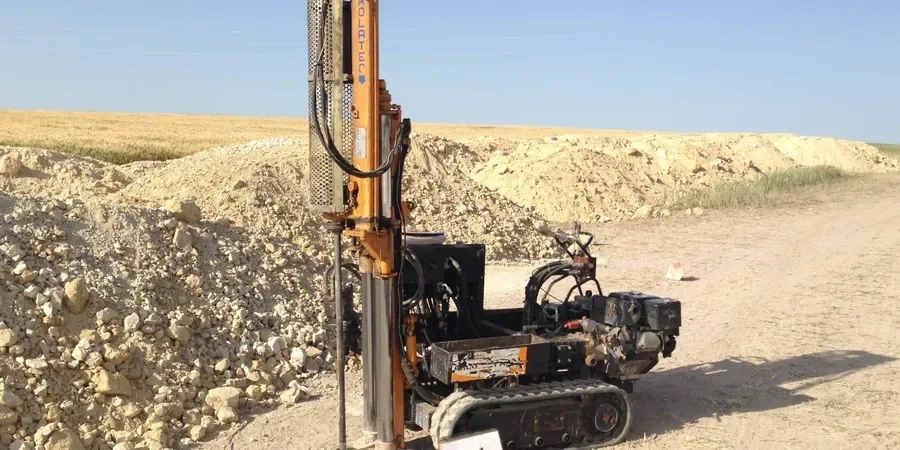
A contractor excavating for a stormwater retention pond near Lake Nona hit saturated sand at just six feet depth. The water inflow slowed production to a crawl, and the dewatering plan on paper no longer matched reality. That scenario plays out across Orlando more often than developers expect, given the high water table that sits just below our sandy surface soils. A field permeability test — specifically the Lefranc or Lugeon method — delivers the in-situ hydraulic conductivity values you need to size pumps, design cutoff walls, or calculate infiltration rates before the first bucket hits the ground. Whether you’re working on a municipal drainage project in Winter Park or a commercial foundation in the tourist corridor, knowing how water actually moves through the formation, rather than relying on lab estimates from disturbed samples, changes the entire approach. We pair these tests with test pits when visual soil profiling helps target the right test intervals, and lean on grain-size data to confirm the permeability range we measure in the field.
Lab permeability from reconstituted samples tells you what the soil could do. A Lefranc or Lugeon test tells you what the formation actually does, in place, under real groundwater conditions.
Top questions
How much does a field permeability test cost in Orlando?
A single Lefranc or Lugeon test in the Orlando area typically runs between US$590 and US$1,070 per test interval, depending on depth, access conditions, and whether the borehole is already available or needs to be drilled. Multiple test intervals in the same borehole reduce the per-test cost. We provide a firm quote after reviewing the boring layout and target depths.
When is a Lugeon test required instead of a Lefranc test?
Use a Lugeon test when the formation is rock or heavily fractured material — common in Orlando where limestone of the Ocala Group sits at moderate depth. The Lugeon method uses a packer to isolate a specific section of the borehole and injects water under pressure, measuring fracture flow in Lugeon units. A Lefranc test is the right choice for granular soils above rock, where water flows through pore spaces rather than fractures.
How long does an in-situ permeability test take on site?
A single Lefranc test interval in sandy soil can stabilize within 30 to 60 minutes. Lugeon tests in fractured rock take longer — typically 90 minutes to 2 hours per interval — because we run multiple pressure steps to evaluate flow regime changes. The total field time depends on how many intervals you need tested and the drilling setup.
Can you run permeability tests in existing monitoring wells?
Yes, with some limitations. A rising-head or falling-head test can be performed in an existing well if the well screen and filter pack are appropriate for the formation being tested. The method is often called a slug test. Results are valid for the screened interval only, so if you need depth-specific data, a new borehole with open-hole or packer-isolated testing may be more useful.